Tips & Guides
Bouldering Tips & Tricks
Gear, technique, safety, and etiquette: everything nobody tells you before your first session, all in one place.
Footwork Fundamentals
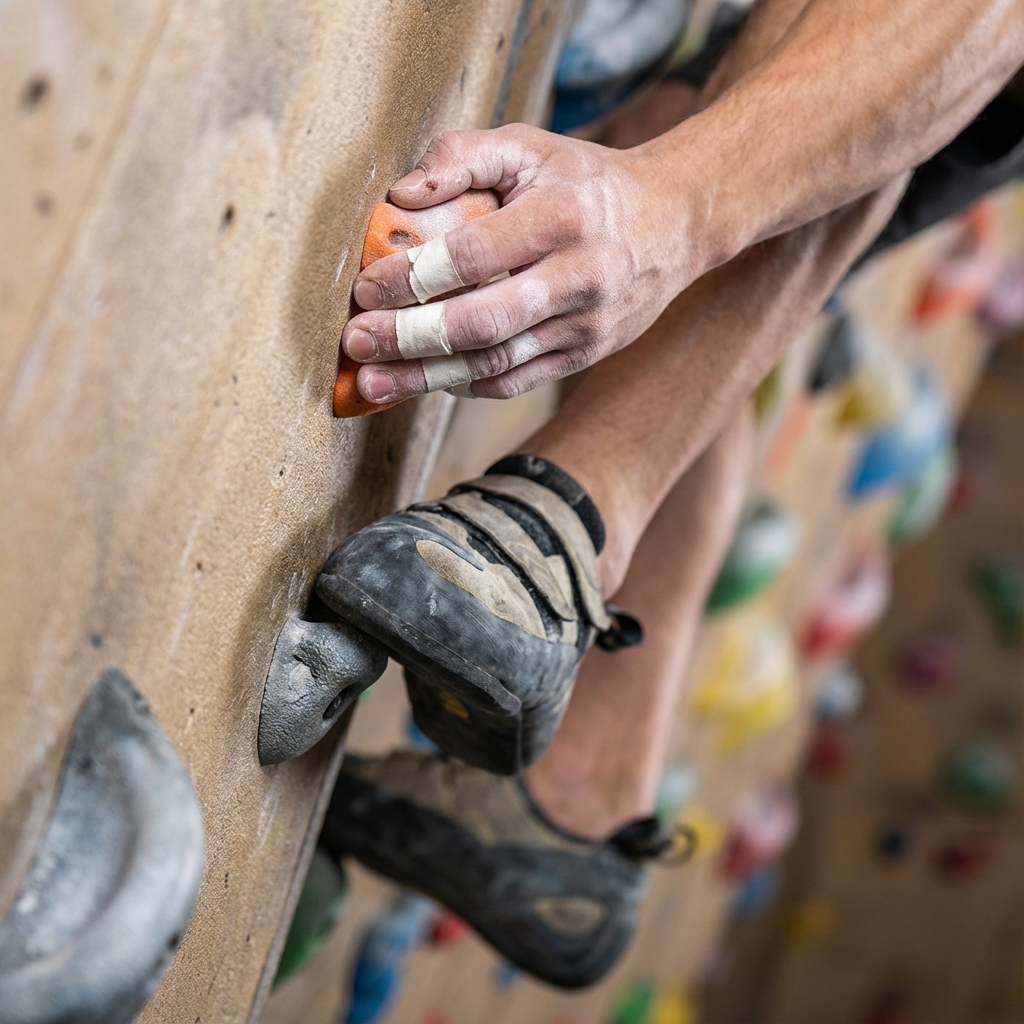
- Toe-in:Precise toe on small holds; heels low for max rubber.
- Smear:Flat foot on slabs/volumes; press through the ball and seek texture.
- Edging:Inside/outside edge for stability; stiff shoes help tiny features.
- Pivot & quiet feet:Place toes so you can pivot; avoid re-adjusting once set.
- Foot-first scanning:Spot footholds and keep weight under your center before moving hands.
Hooks & Special Footwork
- Heel hooks:Toes away, engage hamstrings/glutes; great on slopers, volumes, aretes.
- Toe hooks:Dorsiflex and pull with shin/core to stop swing on steep ground.
- Heel-toe cams:Wedge heel and toe between opposing surfaces for powerful opposition.
- Bicycles/reverse:Clamp holds between two feet to maintain tension.
- Knee bars & jams:Create opposition for rests; release carefully to protect joints.
Body Position & Balance
- Open hips & back-steps:Keep a hip in to stay close and lengthen reach.
- Drop knees:Roll the knee down to deweight arms and reach farther on steep moves.
- Flagging:Standard, back, and inside flags prevent barn-dooring (swinging open like a door) when holds are one-sided.
- Rock-overs:High-step, stack hips over the foot, and stand tall.
- Stemming/bridging:Press against opposing surfaces for balance and rests.
Dynamic vs. Static Movement
- Generate from hips:Deadpoints/dynos start from hips and legs, not just arms.
- Control swing:Catch with some lock-off; let legs "flick" through the swing instead of over-braking.
- Static control:Smooth, deliberate motion with three points of contact on slabs or tiny holds.
- Choose wisely:Dynamic when static is sketchy; static when precision trumps power.
Grip & Hold Strategy
- Jugs & ledges:Rest and shake with straight arms; push with legs.
- Crimps & edges:Prefer open-hand; keep hips in and feet high to reduce finger load.
- Pinches & slopers:Engage thumb on pinches; maximize skin contact and keep hips low on slopers.
- Pockets:Use strongest fingers, pull perpendicular, keep arms straight.
- Underclings/sidepulls/gastons:Drive with feet, pull perpendicular, use opposition to stay balanced.
Problem-Solving & Reading
- Read feet first:Identify footholds, flags, and rest stances before pulling on.
- Plan sequences:Hand/foot order, match vs. bump, where to chalk/breathe.
- Break it down:Work start, crux, and top separately; link sections before full sends.
- Adapt mid-climb:Switch feet, change flag, or go dynamic if static fails.
Efficiency, Safety & Mindset
- Use legs, keep arms straight:Let your skeleton rest; push with legs like a ladder.
- Rest smart:Shake on jugs, breathe, limit hard burns to 3 to 5 quality tries.
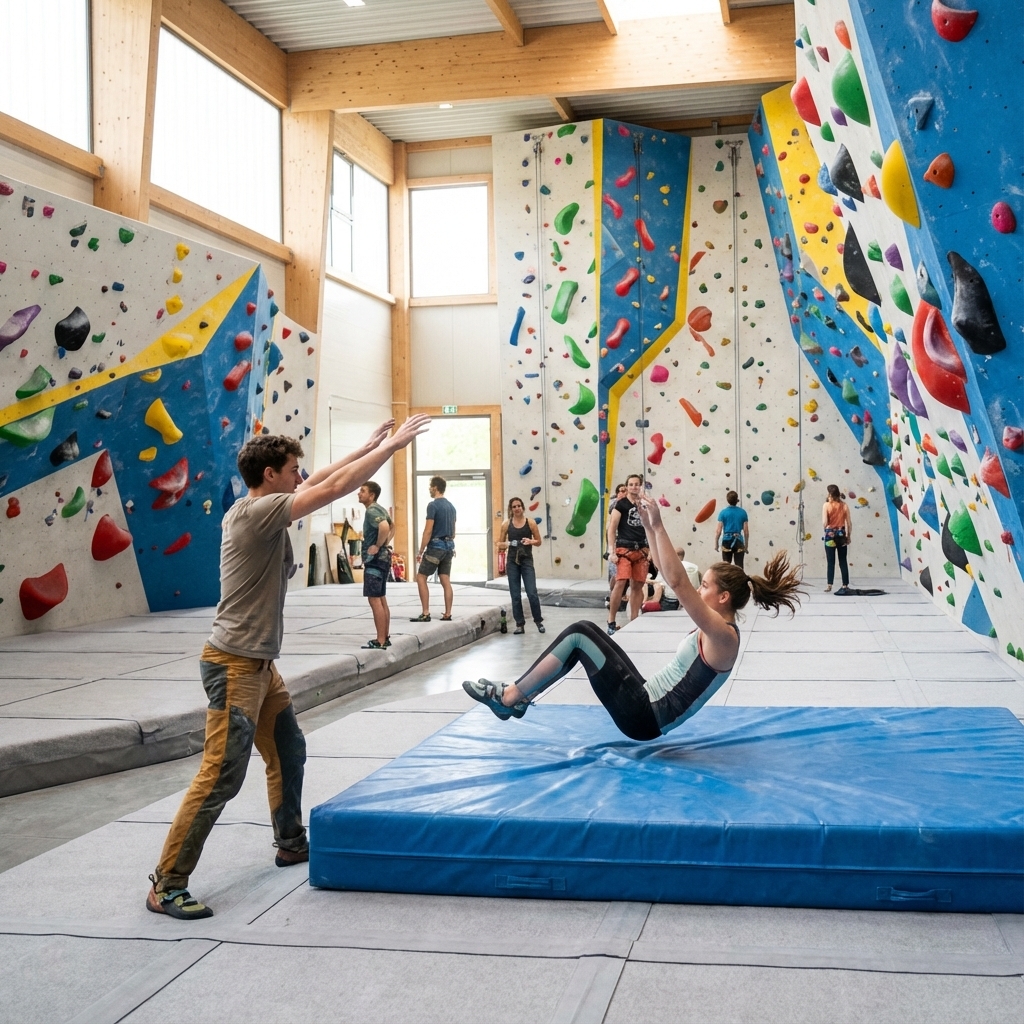
- Falling & spotting:Practice safe land-and-roll; spot to guide onto pads.
- Progress & confidence:Film attempts, track small wins, mix styles/grades, cross-train mobility/strength.